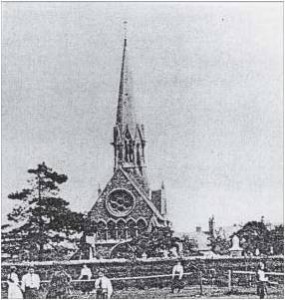
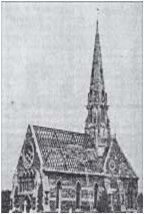
The aim of this lesson(s) and its activities is for pupils to investigate change and continuity in the chronology of an historical site (in this case Mill Road Cemetery) though analysis of a range of original source material.
As an initial stimulus activity (starter) invite pupils to suggest words and feelings they might associate with the word cemetery. Record these on a diagram and retain for later reference.

Resources to download: Resource C Resource D
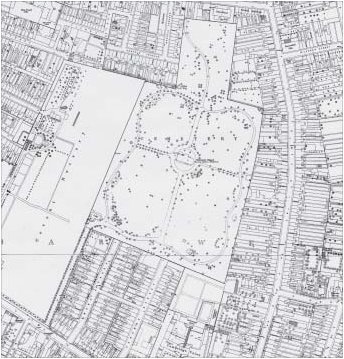
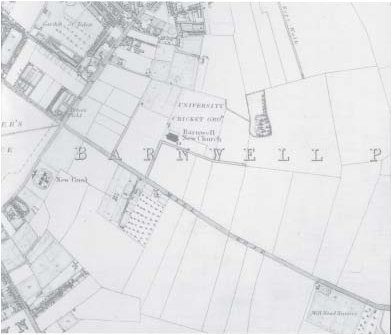
Pay an initial visit to Mill Road Cemetery without explaining details in advance. Ask pairs or groups of pupils to tour the site, marking its main features on a sketch map and noting what surrounds the site. In class, compare sketch maps and draw a class version with agreed features marked on it. Invite suggestions as to how the site may have changed since 1848, when it was built and ask how we can answer the question. “How do we know how Mill Road Cemetery has changed since 1848?“ Invite pupils to speculate on the likely extent of change since 1848 and agree a sentence summarising what they think e.g “we think the cemetery has not changed much.”
Image of the satellite view of the site (You can zoom in or out from this image)

Discuss the relative accuracy of the sketch maps created earlier. Give out downloads of the 1830, 1863, 1888 and 1975 maps featured in the column next to this text and ask pairs or groups of pupils to identify what has changed over time and what has remained the same (the obvious change is the build up of housing around the site, the discernable change in the cemetery itself on this scale is the chapel which is absent by 1975).
Refer back to the class sentence completed earlier and discuss whether it needs to be altered and if so how and why. Invite suggestions for what further original evidence might be useful for gauging how much the cemetery has changed. Give out the following resources featured by the side of this text; Andrew Murray’s sketch plan of Mill Road Cemetery showing the position of proposed tree clumps and a handwritten list of conifers, the plan for the allotment of land to each parish for the extension of their church yards, a photograph of the mortuary chapel 1910, a photograph of the chapel’s demolition in 1954. Discuss this new evidence in groups/pairs, referring back to the earlier maps and take suggestions as to what it indicates about changes and continuity in the site. Repeat discussion of the class sentence and agree an amended version if felt necessary.

Lastly, give out the timeline (Resource C) featured by the side of this text and Resource D (graphs showing the use of the site from a visitor survey in 2003). Repeat group discussion and feedback. Refer to the class sentence about the extent to which Mill Road Cemetery has changed and take suggestions for how or if it should be amended. A return visit to the cemetery could be made with the various sources used in this part of the enquiry to cross-refer with what they find on the site eg the outline of the chapel, remaining parish markers etc.
As a plenary, pupils could return to what they suggested their impressions of the cemetery might before they visited it and discuss how and why these might have changed.